




Skin Veil: the application guide
 Ellis never believed in telling anyone how to use makeup. Creative freedom was her middle name. The whole point was to let people play, explore, trial and error and find what feels right. For themselves. Skin Veil was designed with that same spirit: a foundation that adapts to you, not the other way around. These videos show a few ways to apply it, but none of them are rules. Just possibilities. Find your favourite.
Fingers, foundation, finish
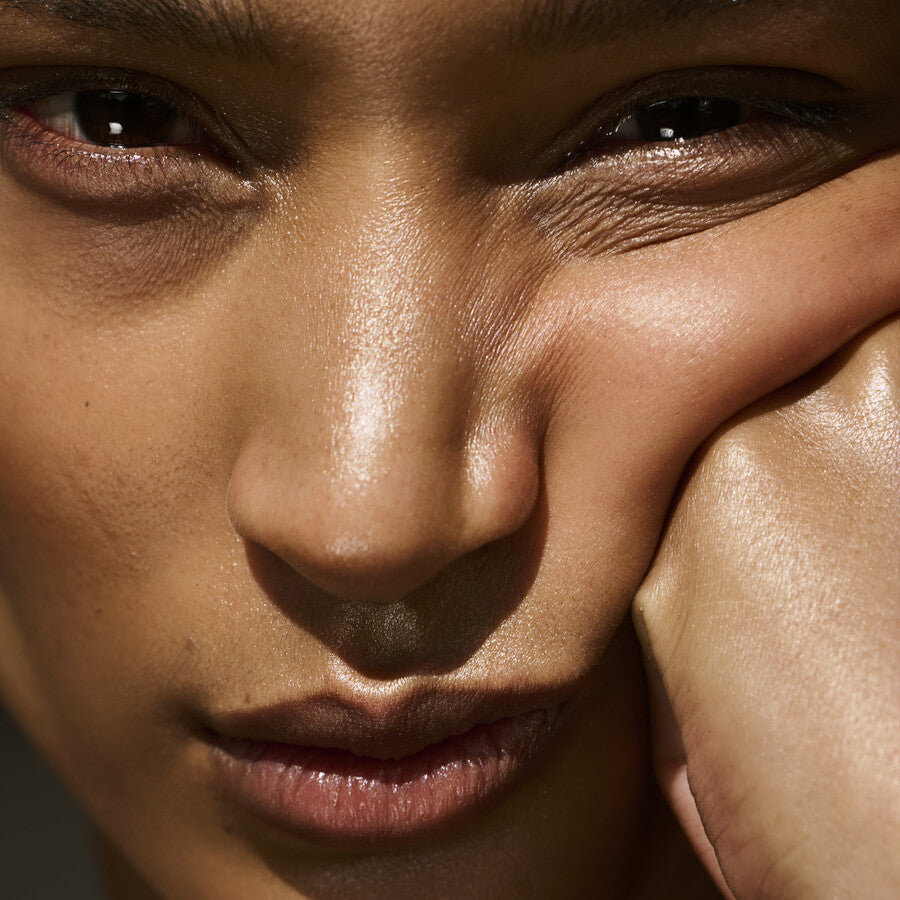
Ellis often applied foundation with her fingers. Quick, intuitive, and beautifully simple. A true Fingerspitzengefühl, as the Germans say. Warm the product between your fingertips, then blend from the centre of the face outward. This technique lets the texture melt in naturally, creating a seamless finish that still looks like skin. If you want more coverage, just add a little extra where you need it. Skin Veil is buildable without ever becoming heavy, so you can layer while keeping the natural look intact.
The brush crush approach
Prefer a brush? Skin Veil works just as well. Use a small amount and buff it gently across the skin in circular motions. A brush gives you a slightly more polished, diffused finish. Perfect if you like precision or want to focus coverage on specific areas. The formula stays flexible, so even with a brush, it never sits on top of the skin. An ideal technique for the control‑freaks among us who like their foundation exactly where they put it.
The foundation
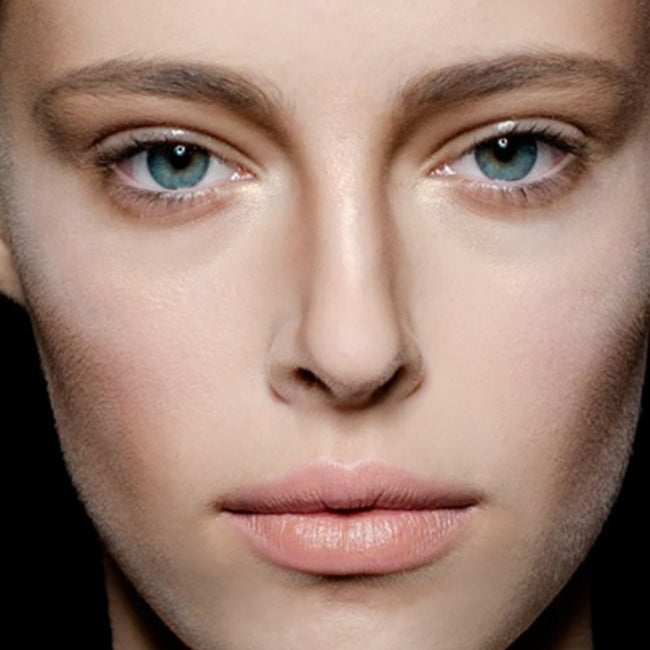
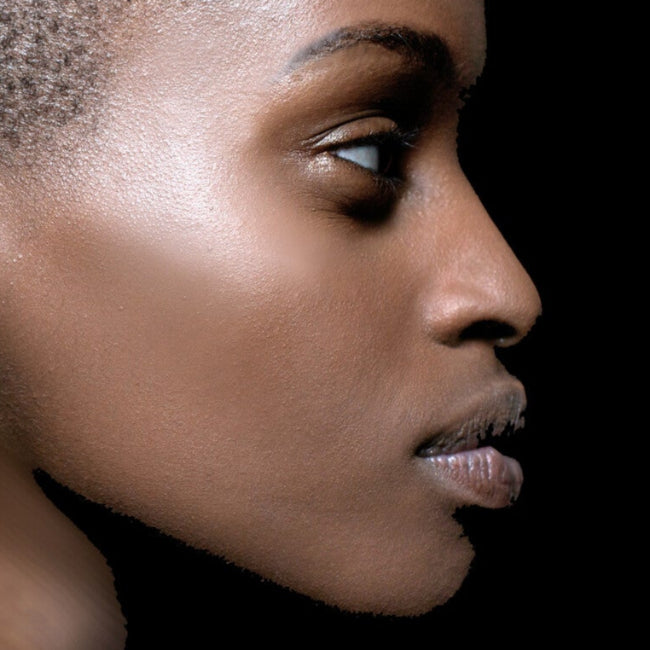
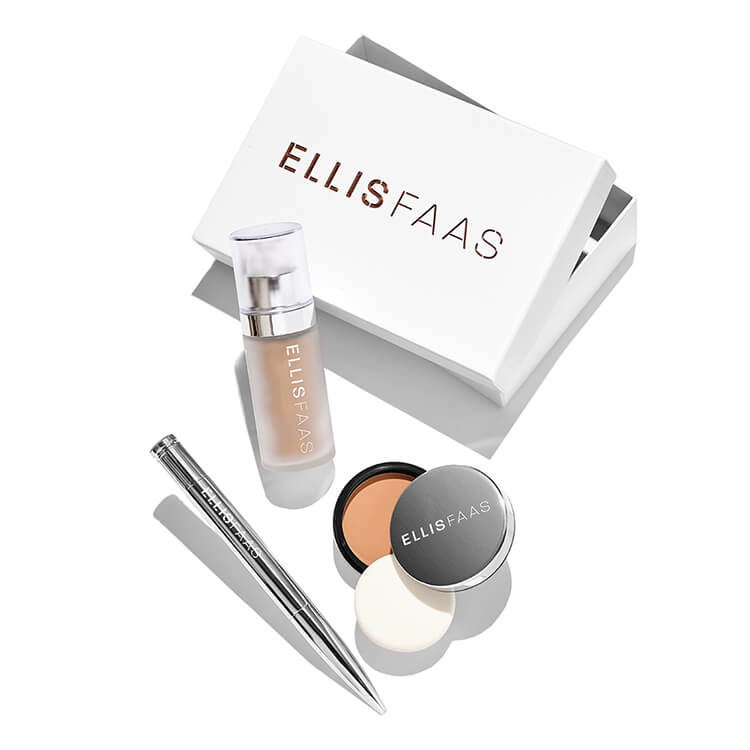
Skin Veil was shaped by the love of makeup and natural skin, not by marketing bla bla. Ellis wanted a foundation that felt weightless, moved with the skin and left room for freckles, texture, imperfections and personality. After testing countless formulas, she found her match in a Japanese lab that understood her obsession with subtlety. Together they created a liquid that warms up on the skin, melts in quietly and evens out without erasing life. One layer gives a natural, medium finish. But it's buildable, so use more if you like.
The formula is crafted in Japan using a traditional three‑roll milling technique, borrowed from the world of ink making. Instead of grinding pigments dry, the ingredients are pressed and blended until they become one seamless fluid. The result is depth of colour, a soft blur and a second‑skin finish that doesn’t sit on top but becomes part of you.